CSotD: False Facts and the New Normal
Skip to comments

I’ve cited this anecdote about Daniel O’Connell, the Liberator, in the past, but it’s been awhile since we’ve found ourselves confronted with quite so many “false facts.” Today we call them “alternative facts” and they have become fundamental to our current reality.

The latest bit of alternative reality is, in fact, true: The Reflecting Pool on the National Mall is, indeed, longer than the Sears Tower, the Empire State Building or the World Trade Center, which raises the question “So what?”
Pikes Peak weighs more than an elephant. There are more geysers in Iceland than in Peru. Ice cream has no bones. The fact that a statement is true doesn’t make it relevant.
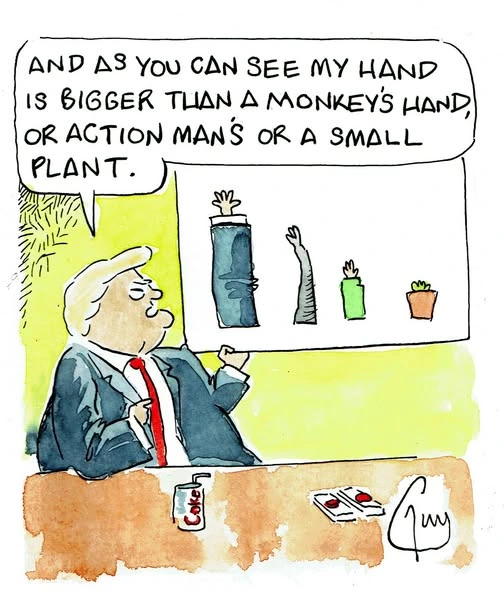
Venables seized upon Trump’s long-established sensitivity about the size of his hands, which became “a thing” after Dear Leader complained about a writer pointing it out. It’s a reminder of when you told your six-year-old that, if he stopping throwing tantrums, the other kids would quit teasing him.

Boris seized the moment to point out how Trump’s administration has raised the national deficit, a reminder that, while the GOP complains about “tax and spend” Democrats, the deficit has climbed faster when their “don’t tax but spend anyway” administrations are in power.
It’s a fact that is true, though it involves some variables, but it’s certainly more relevant than whether a pool is longer than a building is high.

And Goris contrasts the irrelevance of lengths and heights with a reminder that we still haven’t yet addressed the Epstein Files, which may not actually pile as high as those buildings but are far more relevant than what is longer than what is high.

In this cartoon, Zapiro is addressing a crisis in his own country, but it should remind Americans of a “false fact:” the bizarre contention that white South Africans are being systematically murdered, a discredited rumor that inspired our government to give Afrikaners special refugee status.
Note that Zapiro — himself a white South African — doesn’t list Afrikaners among those under attack. Tales of Afrikaners being persecuted and murdered are so rampant here, however, that South African President Cyril Ramaphosa had to refute them when he visited the White House and was confronted with the “false fact.”
But his words were wasted. The lie has already been embedded and made part of American policy.
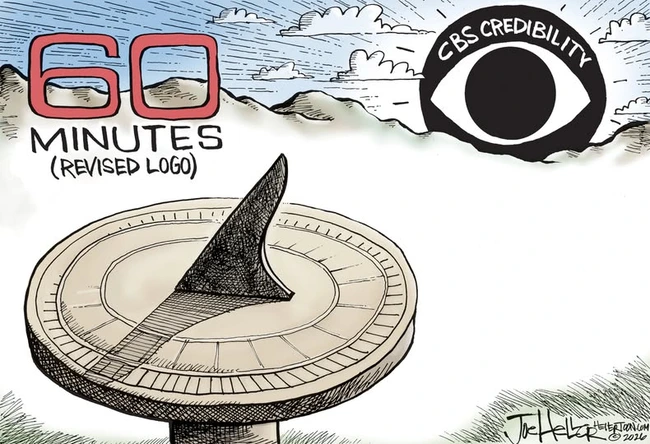
And then there is the issue of 60 Minutes, the highest rated news program in America, which is undergoing mass changes under the new ownership of CBS and the new management of Bari Weiss. As Heller warns, the uproar threatens the network’s credibility.
There was initial surprise when Weiss was hired, because she has little experience on the news side, being known as an opinion writer and blogger. She is seen as a proponent of free expression by those on the right, and as an anti-woke crusader by others, with the latter take seeming dominant among the program’s audience.
The first crisis in her management came early on, when she delayed broadcast of a report on a prison for deportees because she felt the Trump administration had not had enough input, though they had declined comment.
The reporter on the piece has since been dismissed, but not without having protested Weiss’s interference with a piece that had already been fact-checked and cleared by 60 Minutes standards. In addition, several 60 Minutes hosts have left or been fired, including Scott Pelley, who was sacked for insubordination after a staunch criticism of Weiss at a staff meeting.
Margaret Sullivan has a complete takedown on the situation in her latest Guardian column.
It’s a complex and ongoing situation, and the Hollywood Reporter has the most up-to-date and complete breakdown of where things stand.

Zyglis is among several commentators who see beyond the program’s own ratings and credibility issues, and suggest that it is evidence of interference by corporate owners that threatens the free press, as more media outlets — both print and broadcast — come under the ownership of billionaires with other priorities.
Not only is the new ownership of CBS seen as Trump-friendly, but Jeff Bezos, whose ownership of the Washington Post included spiking an editorial endorsement of Kamala Harris and who bankrolled a flattering movie about the First Lady, has gained significant government contracts in non-media industries.
The fear among First Amendment advocates is that owners with other irons in the fire will temper the voices of media to placate those who hand out contracts, and that Bezos’s demand that Washpo editorial pieces stress “free markets and personal liberties, and Weiss’s crusade against “woke” coverage is an early sign of this issue.
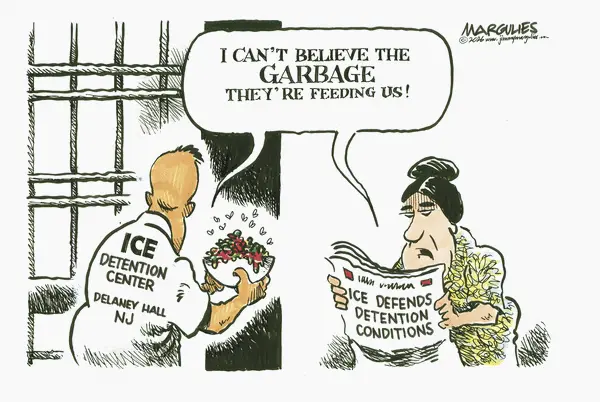
Margulies takes on a specific issue, citing reports of cruel treatment at the Delaney Hall Detention Center, where prisoners report maggots in the food and repressive punishments, and includes in his criticism coverage that seems to take the institution’s side.
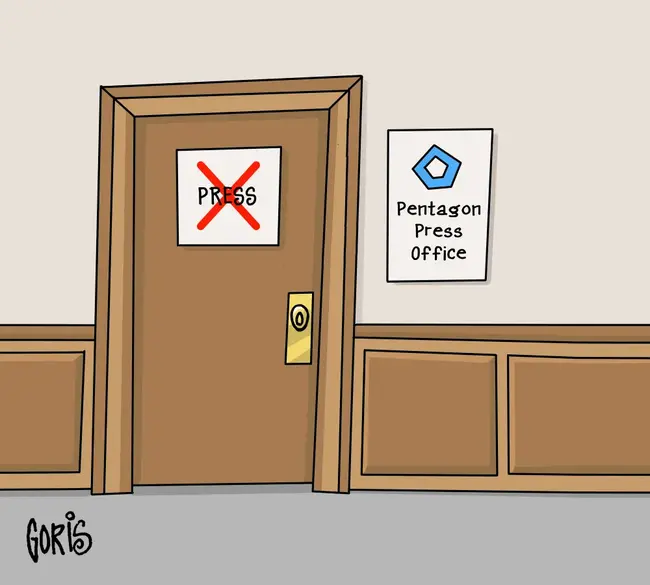
Moreover, as Goris points out, the Pentagon has now declared its press office a classified space from which reporters are barred. This sounds like something out of Catch-22, in which you can only go to the press office if you are a journalist, but, if you’re a journalist, you are not allowed to be there.
It sure seems like an attempted end-run around a recent court ruling that forbids the Defense Department from keeping journalists from normal access and from restricting credentials to those pledging obedience to the department.
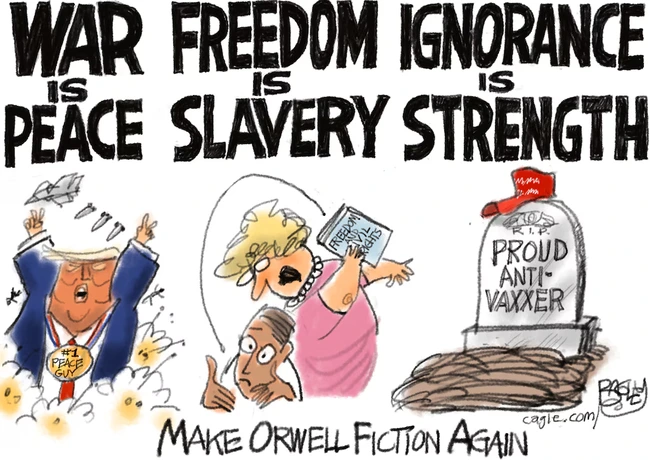
If Catch-22 isn’t how you see our situation, Bagley offers a 1984 reference, and this one stands out because he includes the INGSOC motto entirely, citing Dear Leader’s enthusiasm for wars, the censorship of thoughtcrime and the war against modern science.
I accept the parallel, but I still think of Animal Farm, and when the pigs began walking upright:
(T)here came a moment when the first shock had worn off and when, in spite of everything … they might have uttered some word of protest. But just at that moment, as though at a signal, all the sheep burst out into a tremendous bleating of—
“Four legs good, two legs BETTER! Four legs good, two legs BETTER! Four legs good, two legs BETTER!”
And it seemed as if it had always been that way.
Mike Peterson has posted his "Comic Strip of the Day" column every day since 2010. His opinions are his own, but we welcome comments either agreeing or in opposition.


Comments 19